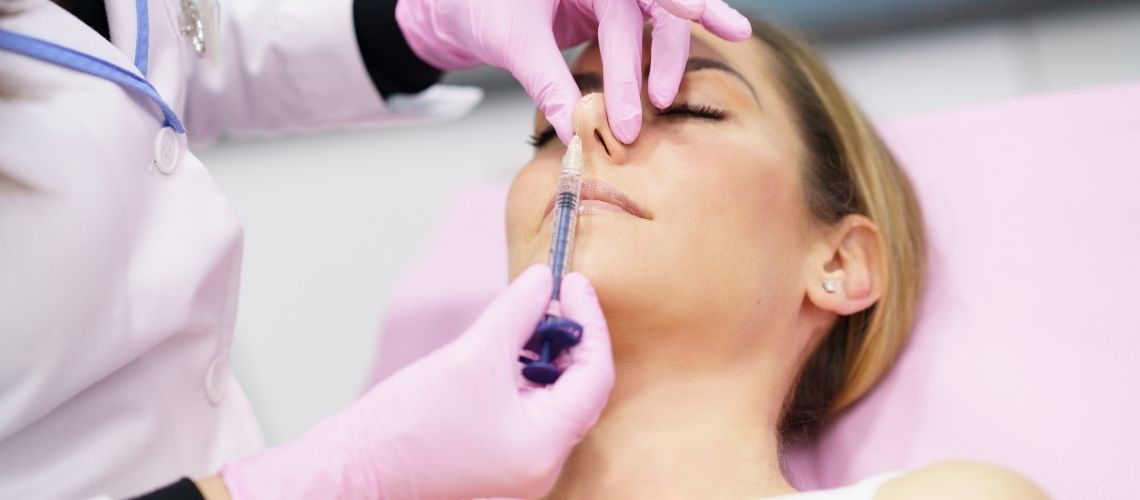
A droopy nose tip when smiling is often caused by hyperactivity of the depressor septi nasi muscle, which pulls the nasal tip downward during facial expression. Treatment typically involves surgical correction through rhinoplasty or targeted use of botulinum toxin to relax the responsible muscle.
Surgical rhinoplasty offers a permanent solution by modifying the underlying anatomy. Techniques may include trimming or repositioning the depressor septi nasi muscle, reinforcing tip support with cartilage grafts, or adjusting nasal tip rotation to prevent downward movement during smiling.
Non-surgical treatments such as botulinum toxin injections provide temporary relief by weakening the depressor muscle. This approach is minimally invasive and ideal for patients seeking a short-term or reversible result. Effects generally last 3–6 months and may require repeat sessions.
Choosing the appropriate treatment depends on the severity of tip droop, patient goals, and overall nasal structure. A consultation with a facial plastic surgeon is essential to assess dynamic movement, facial harmony, and the best intervention strategy for a natural and balanced nasal appearance.
What Does a Droopy Nose Tip When Smiling Mean?
A droopy nose tip when smiling refers to the downward movement of the nasal tip during facial expressions, especially smiling or laughing. At rest, the nose may appear proportionate, but as the upper lip moves upward, the tip of the nose rotates downward. This dynamic change is often more noticeable in photos or during conversation.
This condition is generally related to facial muscle activity rather than a structural problem present at all times. It does not usually cause breathing difficulties or medical harm, but it may be a cosmetic concern for some individuals.
Why Does the Nose Tip Drop When Smiling?
Several anatomical and functional factors can contribute to this issue. In many cases, more than one factor plays a role.
One common reason is the activity of a facial muscle called the depressor septi nasi. This muscle connects the upper lip to the base of the nose. When a person smiles, the muscle can pull the nasal tip downward. In some people, this muscle is stronger or more active, making the movement more visible.
Another factor may be the support structure of the nasal tip. The shape and strength of the nasal cartilages help maintain the position of the nose. If these cartilages are naturally weaker or positioned differently, the tip may rotate downward more easily during facial movement.
The length and mobility of the upper lip can also influence how the nose behaves when smiling. A highly mobile upper lip may exaggerate the downward pull on the nasal tip.
Age-related changes can play a role as well. Over time, soft tissues may lose elasticity, and the nasal tip may appear less supported, making dynamic drooping more noticeable.
Is a Droopy Nose Tip a Medical Problem?
In most cases, a droopy nose tip when smiling is not a medical issue. It does not typically interfere with nasal breathing or overall health. The concern is usually aesthetic and related to facial harmony.
However, every face is different. A detailed evaluation by a qualified medical professional is important to understand whether the issue is purely muscular, structural, or a combination of both. Individual anatomy determines whether treatment is appropriate and what type of approach may be considered.
Non-Surgical Treatment Options
For individuals looking for non-surgical approaches, certain treatments may be discussed during a medical consultation. These options focus on reducing the muscle activity that pulls the nasal tip downward.
One commonly discussed method is botulinum toxin injections in carefully selected cases. When applied in very small amounts to the muscle responsible for pulling the nose downward, the excessive movement during smiling may be reduced. As a result, the nasal tip may appear more stable when smiling.
This approach is temporary and its effects gradually wear off over time. It may not be suitable for everyone, and precise application by an experienced medical professional is essential. The goal is not to eliminate natural facial expressions, but to balance muscle activity.
Non-surgical treatments do not change the structure of the nose. They are generally considered for individuals with mild to moderate drooping caused primarily by muscle action rather than cartilage shape.
Surgical Approaches and When They Are Considered
In some cases, especially when structural factors play a significant role, surgical correction may be discussed. Surgical approaches aim to improve the support and position of the nasal tip.
Procedures performed within the scope of rhinoplasty can address drooping by adjusting cartilage support, modifying muscle attachments, or refining nasal tip rotation. These techniques are tailored to the individual’s anatomy and facial proportions.
Surgery is a personal decision and requires careful consideration. It involves a detailed evaluation, discussion of expectations, and an understanding that results can vary. Surgical treatment is not recommended solely based on appearance during smiling without a comprehensive assessment.
It is important to note that no surgical procedure can guarantee a specific aesthetic outcome. Healing processes and individual tissue responses differ from person to person.
What to Expect During Evaluation
An evaluation typically includes an examination of the nose at rest and during facial expressions. Photographs or video analysis may be used to understand how the nose moves when smiling.
The medical professional considers factors such as nasal structure, muscle activity, skin thickness, and overall facial balance. Listening to the individual’s concerns and expectations is a key part of this process.
The most appropriate approach, if any, is determined on a case-by-case basis. In some situations, reassurance and explanation alone may be sufficient, especially if the drooping is mild and within normal anatomical variation.
Psychological and Social Considerations
Concerns about facial appearance often have an emotional component. Some individuals may feel that their smile looks less attractive because of the way their nose moves. These feelings are valid and deserve to be addressed with sensitivity.
At the same time, it is important to recognize that facial movement is a natural part of expression. A dynamic face is often perceived as warm and approachable. A medical consultation can help distinguish between realistic concerns and normal variations in appearance.
The Importance of Individualized Decision-Making
There is no single “best” treatment for a droopy nose tip when smiling. What works for one person may not be suitable for another. Factors such as anatomy, age, skin characteristics, and personal expectations all influence decision-making.
Professional evaluation is essential, and any intervention should be planned with a clear understanding that results depend on individual factors. Medical advice should always be personalized, and treatment decisions should be made collaboratively between the patient and the healthcare professional.

Op. Dr. Yunus Kaplan is a ENT surgeon with over 15 years of experience specializing in facial aesthetics and rhinoplasty in Istanbul, Turkey. A graduate of Gaziantep University Faculty of Medicine, he completed his ENT specialization at the same institution in 2009 and has since practiced in several prominent private hospitals before founding his own clinic in 2016. Dr. Kaplan focuses on primary, revision, ethnic, and piezo rhinoplasty procedures, combining precision and natural results. He is an active member of the European Academy of Facial Plastic Surgery (EAFPS), the Turkish Facial Plastic Surgery Society, and the Head and Neck Surgery Society, maintaining high standards of medical ethics, artistry, and patient trust.